

The global struggle for the rights of women and girls is not just a moral imperative; it is a strategic necessity for a sustainable future for everyone. While gender equality is interwoven with every aspect of development, the world remains at a critical crossroads. Without a dramatic shift in commitment, we risk a “backtrack” scenario that could leave billions of women living in countries with poor equality scores. However, by following the “fast track” set by the world’s most progressive nations, we can achieve global gender equality as soon as 2049—nearly 60 years sooner than our current trajectory suggests.
Language: Sp
Introduction
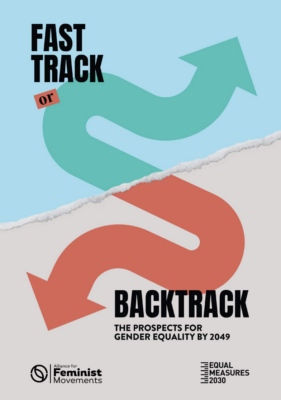
The Gender Equality 2049 report, produced by Equal Measures 2030 in collaboration with the Alliance for Feminist Movements, reveals that progress toward gender equality is currently too slow and fragile to meet the 2030 Sustainable Development Goals (SDGs). Nearly three-quarters of all SDG targets rely directly on the advancement of gender equality, yet at our current pace, the world will not reach this milestone until the year 2108.
This report highlights a stark divide between two possible futures:
-
The Fast Track: If all countries accelerate progress at the rate of the 15 fastest-improving nations, the global Gender Index score could reach a “fair” level by 2030, putting gender equality within reach by 2049.
-
The Backtrack: Conversely, one in three countries is currently making no progress or moving in the wrong direction. A global shift toward this “backtrack” scenario would lead to a dangerous reversal of rights, leaving 85% of the world’s girls and women in countries with “poor” or “very poor” equality scores.
A central finding of this research is the indispensable role of feminist movements. From mobilizing against femicide in Argentina to securing political quotas in Nepal, strong feminist advocacy is the most consistent driver of meaningful policy change. By examining case studies across five diverse nations—Argentina, Canada, Malawi, Nepal, and Uruguay—this report demonstrates that when feminist organizations are funded, listened to, and given space to lead, the “fast track” to 2049 becomes a reality.
The Global Alliance for Sustainable Feminist Movements is a multi-stakeholder initiative launched at the Generation Equality Forum to significantly increase and improve financial and political support for feminist organizations and women’s rights movements. Functioning as a platform for collective action rather than a direct funding mechanism, the Alliance aims to create a space where the impact of joint efforts exceeds the sum of individual parts. The initiative’s Design Phase (scheduled through June 2022), was a period of intentional co-creation where members shared insights to determine the Alliance’s core principles, governance, and work plan.
Introduction
This report details the outcomes of the initial kick-off consultations held on December 8 and 9, 2021, and the results of a preliminary survey conducted among the Alliance’s Reference Group. With a 55% response rate, the survey captured the motivations and preferences of 78 member organizations, highlighting a strong collective interest in brainstorming future areas of work and refining organizational goals. The findings presented in this document reflect the Reference Group’s desire for a platform centered on:
-
Mutual Learning and Advocacy: A primary motivation for members is engaging in joint advocacy, solidarity, and movement strengthening.
-
Inclusivity and Intersectionality: Members emphasized the need for the Alliance to be inclusive of structurally excluded communities, including Indigenous women, LBTQI people, and young feminists.
-
Effective Funding Models: There is a clear call for the Alliance to champion core, long-term, and flexible funding for feminist movements.
By documenting these early preferences for engagement and feedback, this report serves as a roadmap for the Planning Group to adapt the Design Phase and ensure the Global Alliance effectively meets the needs of its diverse stakeholders.
This report outlines the key findings emerging from the second survey consultation with the Reference Group of the Global Alliance for Sustainable Feminist Movements (Global Alliance). This survey built on the feedback received during the first consultation with the Reference Group and focused on (1) clarifying the goals / objectives of the Global Alliance, (2) surfacing our assumptions about why the funding ecosystem is the way it is, and (3) starting to conceptualize the areas of work for the Global Alliance.
Introduction
The Global Alliance for Sustainable Feminist Movements is built on the belief that the future of gender justice depends on the strength, resilience, and interconnectedness of our movements. To ensure our collective efforts are both impactful and enduring, we must continuously listen to the voices of those on the front lines.
This report presents the findings from Consultation #2, a vital step in our ongoing journey to refine our mission and sharpen our strategic focus. Following our initial discussions, this second survey was designed to dive deeper into the practical needs and visionary goals of our members. It captures the perspectives of diverse stakeholders committed to building a world where feminist movements are not just reactive, but sustainably resourced and strategically aligned.
Purpose of this Report
The data and insights contained within this document serve two primary functions:
-
Clarifying Our Purpose: Synthesizing member feedback to define what makes our Alliance unique and necessary in the current global landscape.
-
Mapping the Roadmap: Translating raw survey data into actionable strategies that will guide our governance, advocacy, and resource mobilization efforts in the coming year.
By analyzing these results, we move from individual ideas toward a shared blueprint for action. We thank every participant who contributed their time and insight, helping us ensure that the way forward is one we pave together.